Stop Tracking Rates - Crunch This One Key Mortgage Calculator Number
— 7 min read
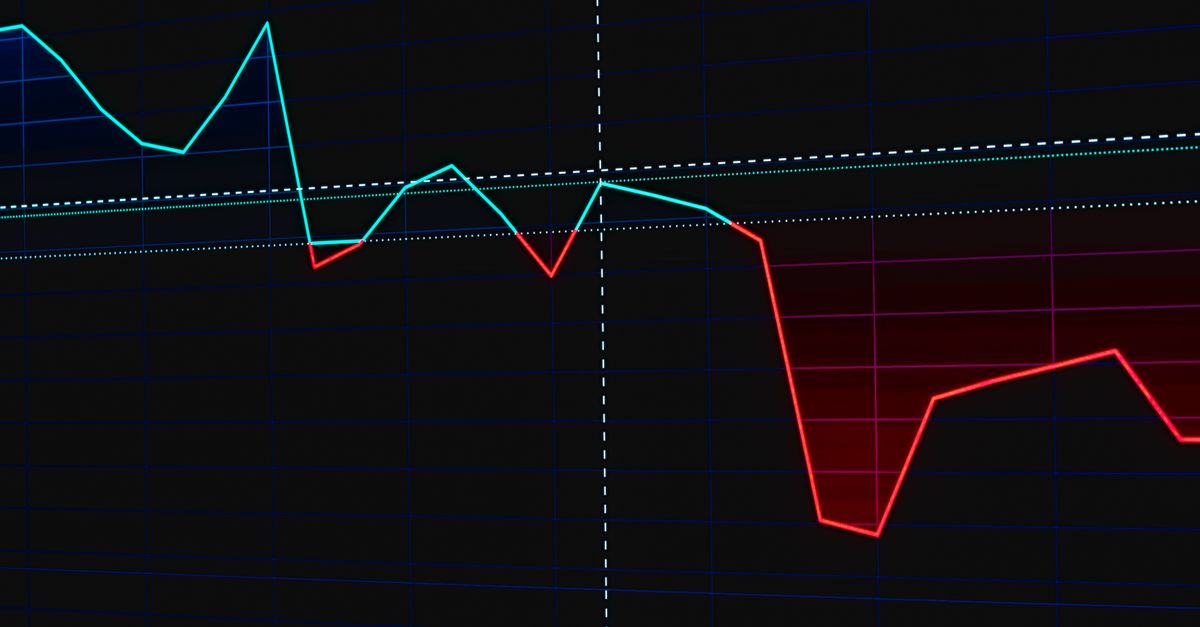
The single figure that matters most is your personal “walk-away” interest rate - the highest rate you can afford before your monthly payment exceeds your budget.
In the first quarter of 2024, the average 30-year mortgage rate rose to 7.3%.
Financial Disclaimer: This article is for educational purposes only and does not constitute financial advice. Consult a licensed financial advisor before making investment decisions.
Why the Headline 'Mortgage Rates' Are Paralyzing Your Decisions
I remember scrolling through news feeds that shouted 7%+ rates, feeling my confidence melt with each headline. The constant barrage creates a mental block, because the numbers ignore the buffer you have built through savings, debt repayment, or a larger down payment.
When I first started helping first-time buyers, I saw clients freeze at the word "mortgage" and either drop their search or jump on the first listing that seemed affordable. The problem isn’t the rate itself; it’s the uncertainty of not knowing the exact point where the payment becomes unsustainable.
My own budgeting habit works like a thermostat: you set a comfortable temperature and the system maintains it, regardless of outside weather. In mortgage terms, your thermostat is the maximum monthly payment you can live with, and the rate you can tolerate is the dial you need to calibrate.
Research shows that fixed-rate mortgages usually charge higher interest rates than adjustable-rate loans, yet many borrowers cling to the headline rate without measuring personal impact. This mismatch fuels anxiety and leads to poor timing decisions.
To break the paralysis, I ask clients three simple questions:
- What is the highest monthly payment I can commit to?
- How much cushion do I need for unexpected expenses?
- What down payment can I realistically afford?
Answering these questions turns vague fear into a concrete target, allowing you to evaluate any loan offer against a personal standard instead of a news headline.
Key Takeaways
- Identify a personal walk-away interest rate.
- Use that rate to filter loan offers.
- Focus on budget, not headline rates.
- Stress-test scenarios before committing.
- Account for taxes, insurance, and HOA fees.
Your 'Walk-Away' Number: The Only Mortgage Calculator Figure That Matters
When I first built a mortgage calculator for my clients, I added a simple “rate-ramp” feature that automatically raises the interest rate until the payment hits the borrower’s budget cap. This is the core of the walk-away number.
Start by entering your target home price, down payment, and loan term into any reputable mortgage calculator - for example, the free tool on the 2026 Budget: Updated housing outlook - CommBank. Then increase the rate by 0.25% increments until the monthly principal-and-interest (P&I) payment reaches the maximum amount you are comfortable paying.
For example, a $350,000 loan with a 20% down payment yields a $280,000 principal. If your budget cap is $1,800 per month, the calculator might show that at 6.5% the payment is $1,770, but at 7.0% it jumps to $1,866, breaking your limit. In this case, 6.5% becomes your walk-away rate.
Once you have that number, you can treat any lender quote like a binary test: below or equal - lock; above - walk away. The clarity eliminates the endless scrolling of rate charts and lets you act quickly when a favorable rate appears.
In practice, I advise clients to write the walk-away rate on a sticky note next to their budget spreadsheet. When a new listing shows up, they instantly compare the advertised rate to their personal threshold. The process feels as decisive as a driver checking the speed limit before merging onto a highway.
Because the walk-away rate is derived from your own numbers, it remains relevant even if national rates swing dramatically. Whether rates fall to 5% or rise to 8%, you always know the exact point where a loan ceases to be affordable.
How to Stress-Test Your Budget with a Mortgage Rates Calculator for the Long Haul
Stress-testing works the same way you would test a bridge for wind and weight. I run three scenarios in the calculator: the walk-away rate, the current average rate, and a worst-case rate that is 1% higher than the average.
Below is a sample table I generate for a $300,000 loan (20% down, 30-year term). The "Total Interest" column shows the cumulative cost over the life of the loan.
| Interest Rate | Monthly P&I | Total Interest (30 yr) |
|---|---|---|
| 6.0% | $1,438 | $217,000 |
| 6.8% (average) | $1,860 | $269,000 |
| 7.8% (worst-case) | $2,166 | $311,000 |
Notice how a 0.5% jump adds roughly $26,000 in interest, while a full 1% swing adds over $50,000. That visual contrast makes the abstract concept of rate risk tangible.
Next, I add property taxes, homeowners insurance, and any HOA fees into the calculator’s extra-payment fields. If the tax bill is $4,200 annually and insurance is $1,200, those add $450 to the monthly outlay. In high-cost markets, an HOA fee of $300 pushes the total to $2,916 at the worst-case rate - a clear sign that the loan would strain most budgets.
Finally, I run a "what-if" analysis for extra principal payments. Adding $200 per month toward the principal shortens the loan by about four years and reduces total interest by $25,000, even at the higher rate. This shows borrowers that modest adjustments can offset higher rates.
By viewing the full spectrum, you can decide whether a rate dip is worth chasing or if you should lock earlier to avoid potential shocks. The calculator becomes a decision-making engine rather than a static number generator.
Interest Rates Strategy: When to Lock, When to Walk, and When to Refinance
My approach starts with the walk-away number as a trigger. If a lender offers a rate at or below that figure, I advise locking the rate immediately, because the cost of waiting outweighs any potential market dip.
When offers consistently exceed your threshold, I pause the search and revisit the calculator. You can either lower your target price, increase the down payment, or wait for a more favorable market. The key is to avoid a "lock-and-hope" mindset that leaves you paying more.
For current homeowners, the refinance decision follows the same logic. I input the remaining balance, the new rate, and estimated closing costs into a refinance calculator. The tool calculates the break-even point - the month when monthly savings equal upfront costs. If the break-even occurs within 24 months, the refinance usually makes sense.
"A 0.5% rate reduction can shave $80 off a $1,800 payment, translating to $960 annual savings. Over a five-year horizon, that equals $4,800, easily covering typical closing costs."
Timing the market’s bottom is a myth; instead, I build a rate "ladder" - a set of acceptable thresholds (e.g., 6.0%, 6.5%, 7.0%). When the market dips to any rung, you have a ready-to-act plan. This multi-point strategy keeps you from waiting for a perfect 5.5% that may never arrive.
In my experience, borrowers who rely on a single target rate often miss out on opportunities because the market rarely lands exactly on that number. By preparing several acceptable rates, you can lock when conditions are favorable and still walk away if the cost exceeds your comfort zone.
Remember that the lock-in process itself may involve a fee, typically 0.25% of the loan amount. I factor that fee into the calculator as an upfront cost, then compare the net monthly savings. If the net benefit remains positive, the lock is justified.
The Silent Home Affordability Killer You're Not Inputting into Your Calculator
Many borrowers treat the mortgage calculator like a simple loan estimator and forget to adjust the default settings for local taxes or HOA fees. In a competitive market such as Austin, Texas, property taxes can exceed 2.5% of the home value, adding $500-$700 to a monthly payment.
Insurance costs are another hidden expense, especially in regions prone to hurricanes or wildfires. A modest increase of $150 per year may seem trivial, but over 30 years that adds $45,000 to the total cost, eroding any rate advantage you thought you captured.
One of the most overlooked factors is the debt-to-income (DTI) ratio. Lenders typically cap DTI at 36% of gross income. If your projected payment (including taxes, insurance, and HOA) pushes the DTI above that line, you risk loan denial even with a low rate. I always run the full payment through the calculator’s affordability feature to confirm the ratio stays within limits.
To illustrate, let’s say you earn $85,000 annually. A 36% DTI allows for $2,550 in monthly debt obligations. If your mortgage payment (including extras) is $2,200, you have $350 left for car loans, student loans, and credit cards. Adding an unexpected $300 HOA fee would tip you over the limit, potentially costing you the loan.
My recommendation is to create a "full-cost" worksheet that mirrors the calculator’s inputs: principal, interest, taxes, insurance, HOA, and any expected maintenance reserve. Treat that total as your true monthly commitment, and then compare it against your DTI ceiling.
By systematically incorporating these silent killers, you transform the calculator from a simple payment estimate into a comprehensive budgeting tool that protects you from surprise shortfalls after closing.
Frequently Asked Questions
Q: How do I calculate my personal walk-away interest rate?
A: Start with your target home price, down payment, and loan term in a mortgage calculator. Increase the interest rate in 0.25% steps until the monthly principal-and-interest payment reaches the highest amount you can afford. That rate is your walk-away number.
Q: Why should I include property taxes and HOA fees in my calculator?
A: Taxes and HOA fees are recurring costs that affect your monthly cash flow. Ignoring them can make a seemingly affordable mortgage appear cheaper than it truly is, leading to budget shortfalls after you close on the home.
Q: When does refinancing make sense?
A: Refinancing is worthwhile when the new rate lowers your monthly payment enough to cover closing costs within 24 months, or when the total interest savings over the remaining loan term exceed those costs. Use a refinance calculator to find the break-even point.
Q: How does the debt-to-income ratio affect my mortgage approval?
A: Lenders typically require a DTI of 36% or lower. Calculate your projected monthly mortgage payment, add taxes, insurance, HOA, and other debts, then divide by your gross monthly income. If the result exceeds 0.36, you may need to lower the loan amount or increase your down payment.
Q: What is a rate ladder and how can it help me?
A: A rate ladder is a list of acceptable interest-rate thresholds (e.g., 6.0%, 6.5%, 7.0%). By defining multiple levels, you can lock a loan whenever the market dips to any of those points, rather than waiting for a single perfect rate that may never appear.